Essentially:
• Proper daily cleaning and storage are the most critical habits for extending the life of your dentures.
• Kennewick patients have access to complete, partial, and implant-supported denture options through local restorative dental care.
• Regular professional checkups help ensure continued fit, function, and oral health.
Patients seeking dental dentures in Kennewick, WA benefit most when they understand both the types of dentures available and the daily care practices that keep them functioning well. Whether a prosthetic is brand new or years old, consistent maintenance is what determines long-term comfort and oral health outcomes.
Types of Dentures Available to Kennewick Patients
Dentures are a type of prosthetic teeth recommended when you need to replace multiple teeth. They work to restore oral function and smile, improving the ability to speak and eat properly, while supporting facial volume and enhancing overall appearance. Dentures are custom made to fit the mouth comfortably and provide an aesthetically pleasing result.
Three main types are commonly offered in restorative dental practices:
|
Denture Type |
Best For |
Key Feature |
|
Complete Dentures |
Full arch tooth loss |
Replaces all upper or lower teeth |
|
Partial Dentures |
Some natural teeth remain |
Clasps attach to existing teeth |
|
Implant-Supported |
Patients seeking stability |
Anchored to implants in the jawbone |
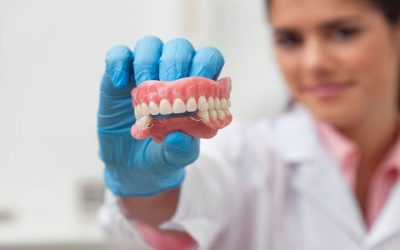
A complete denture replaces all the teeth in the upper or lower dental arch, while a partial denture is used when some healthy teeth remain and includes a thin framework or clasps that attach to natural teeth to ensure a secure fit. While dentures are traditionally removable, a dentist may recommend anchoring them in place with implants.
Daily Care Practices That Protect Your Dentures
Consistent at-home care is the foundation of denture longevity. According to the American Dental Association’s denture care guidance, placing dentures in water or a denture cleanser solution when not being worn helps them retain their shape, remain pliable, and avoid drying out.
Key daily habits include:
• Cleaning dentures daily by soaking and brushing with an effective, nonabrasive denture cleanser to reduce levels of biofilm and potentially harmful bacteria and fungi.
• Using denture cleansers only to clean dentures outside of the mouth.
• Thoroughly rinsing dentures after soaking and brushing with denture-cleansing solutions prior to reinserting them into the oral cavity.
• Never placing dentures in hot or boiling water, which could cause them to warp.
Handling is equally important. Dentures should be held over a folded towel or a basin of water when cleaning to reduce the risk of damage from an accidental drop. Avoid abrasive toothpastes, which can scratch the surface and create areas where bacteria accumulate.
When to See Your Dentist About Denture Fit
Even well-made dentures require periodic professional attention. Patients who wear dentures should be checked annually by a dentist or dental professional for maintenance, evaluation of optimum denture fit and function, assessment for oral lesions and bone loss, and review of overall oral health status.
Signs that a professional visit is overdue include:
• Persistent soreness or irritation under the denture
• Slipping or clicking during normal speech or eating
• Visible cracks, chips, or worn surfaces on the prosthetic
• Changes in bite alignment or jaw discomfort
Denture adhesives are not a remedy for ill-fitting dentures, which may need to be relined or replaced to prevent oral sores from developing. If adhesive has become a daily necessity, that is a signal to schedule a professional evaluation rather than continue compensating for a poor fit.
It takes several appointments to complete dentures and ensure they fit properly. After receiving dentures, the dentist will also provide instruction on caring for the appliance to keep it in good condition, and will check the dentures at each regular dental visit to ensure they fit and function properly and to determine if any maintenance is needed.
Frequently Asked Questions
Can I sleep with my dentures in? It is not recommended that dentures be worn continuously, 24 hours per day. Removing them overnight allows the gum tissue to rest and reduces the risk of denture-related stomatitis.
How long do dentures typically last? Denture lifespan varies based on material, care habits, and changes in jaw structure over time. Most patients require relining or replacement after several years of use; your dentist can assess the current fit at routine visits.
What is the difference between relining and replacing dentures? Relining adjusts the interior surface of an existing denture to improve fit as the jawbone changes shape. Replacement involves fabricating an entirely new prosthetic, which is recommended when the existing denture is structurally compromised or no longer restorable.
Are implant-supported dentures a better option? Implant-supported dentures offer greater stability and can help slow bone resorption in the jaw. They require a surgical procedure and adequate bone density, so candidacy is determined on an individual basis during a consultation.
Schedule a Denture Consultation in Kennewick
Patients in the Kennewick area who need dentures fitted, evaluated, or repaired can reach out to Ideal Dentistry at 1408 N. Louisiana St., Suite 101, Kennewick, WA 99336, by calling (509) 737-8700. The practice provides comprehensive dentistry in Richland and the surrounding areas, including Kennewick, Badger, Burbank, Finley, Highland, Pasco, West Richland, and West Pasco, Washington. Scheduling a consultation is the first step toward a properly fitted prosthetic and a clear care plan tailored to your specific needs.